

Denounce with righteous indignation and dislike men who are beguiled and demoralized by the charms pleasure moment so blinded desire that they cannot foresee the pain and trouble.
Read MoreSafeguarding the Harvest: Understanding Pradhan Mantri Fasal Bima Yojana (PMFBY)
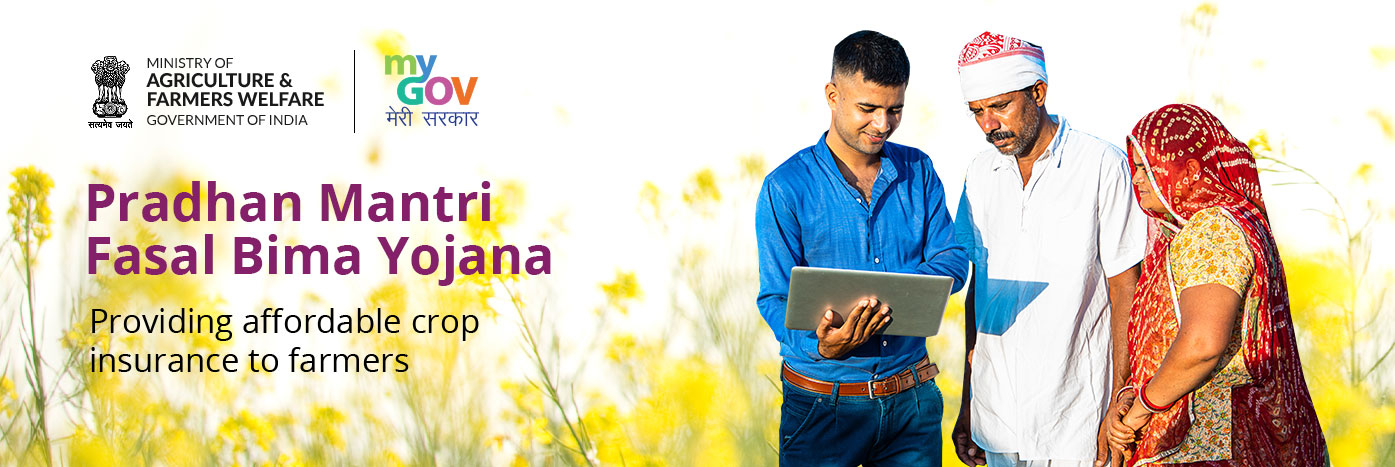
For farmers, their crop is their lifeline. But the unpredictable nature of weather, coupled with the threat of pests and diseases, often leaves them vulnerable to significant financial losses. To provide a much-needed safety net and stabilize their income, the Government of India launched the Pradhan Mantri Fasal Bima Yojana (PMFBY) in February 2016.
This ambitious crop insurance scheme aims to provide comprehensive risk coverage to farmers against crop loss or damage arising out of unforeseen events, from pre-sowing to post-harvest. It’s a crucial step towards building a more resilient and sustainable agricultural sector in India.
What is PMFBY and How Does it Work?
PMFBY operates on a principle of shared responsibility, with farmers paying a nominal premium, and the central and state governments subsidizing the remaining amount. This makes crop insurance accessible and affordable for a vast majority of farmers.
Here’s how it works:
Affordable Premiums: Farmers pay significantly low premium rates:
2% of the sum insured for all Kharif crops (cereals, millets, pulses, oilseeds).
1.5% of the sum insured for all Rabi crops (cereals, millets, pulses, oilseeds).
5% of the sum insured for annual commercial and horticultural crops.
The remaining premium, often a significant portion, is borne by the government, ensuring full coverage without any reduction in claim payouts.
Comprehensive Coverage: PMFBY provides a broad range of coverage, protecting farmers from:
Yield Losses (standing crops): This covers losses due to non-preventable risks like natural fire, lightning, storms, hailstorms, cyclones, floods, inundation, landslides, drought, dry spells, pests, and diseases.
Prevented Sowing/Planting/Germination: If farmers are unable to sow or plant due to adverse weather conditions, they are eligible for claims up to 25% of the sum insured.
Localized Calamities: Losses due to hailstorm, landslide, and inundation affecting isolated farms are also covered on an individual farm basis.
Post-Harvest Losses: Coverage extends up to a maximum of 14 days from harvesting for crops left in “cut and spread” condition in the field for drying, against specific perils like cyclonic rains, hailstorms, and unseasonal rains.
Technology-Driven Approach: The scheme emphasizes the use of technology for accurate and timely assessment of crop losses and claim settlements. This includes:
Utilizing smartphones to capture and upload data from crop-cutting experiments (CCEs).
Leveraging remote sensing and drone technology for yield estimation and loss assessment (e.g., YES-TECH for paddy, wheat, and soybean).
Implementing the Weather Information Network and Data System (WINDS) for hyper-local weather data collection, aiding in precise risk assessment and early warning.
The “Digiclaim Module” has been operationalized since Kharif 2022 to streamline claim payments.
Key Benefits for Farmers:
PMFBY has brought about a significant positive impact on the lives of Indian farmers:
Financial Security: It acts as a crucial safety net, compensating farmers for crop losses and preventing them from falling into debt traps due due to natural calamities.
Income Stabilization: By mitigating financial risks, the scheme helps stabilize farmers’ incomes, encouraging them to continue farming and invest in their land.
Promotion of Modern Agriculture: With reduced risk, farmers are more likely to adopt innovative agricultural practices, improved seeds, and advanced technology to enhance productivity.
Reduced Indebtedness: Financial support during crop failures helps farmers repay their loans, reducing the burden of debt.
Increased Coverage and Transparency: The scheme has seen a significant increase in farmer enrollment, including non-loanee, small, marginal, and tenant farmers. Continuous efforts are made to enhance transparency and accountability in claim disbursement.
Who is Eligible?
All farmers, including sharecroppers and tenant farmers, growing notified crops in notified areas, are eligible for coverage. As of Kharif 2020, enrollment has been made voluntary for all farmers. This means even loanee farmers, who were previously covered mandatorily, now have the option to opt-out.
Applying for PMFBY:
Farmers can apply for PMFBY both online and offline:
Online Registration:
Visit the official PMFBY website:
https://pmfby.gov.in/Register as a “New Farmer User” by providing your details.
Log in and fill out the “Crop Insurance Scheme” application form, providing details like Aadhaar, bank account, and land records.
You can track your application status online.
Offline Registration:
Approach your nearest Common Service Center (CSC).
Visit the Tehsil office or the Agriculture Department.
Some bank branches also facilitate PMFBY registrations.
Documents Required: Aadhaar Card, land ownership documents (Records of Right/RoR, Land Possession Certificate/LPC), bank passbook, and proof of sowing.
PMFBY in Rajasthan (Current Scenario):
As of July 2025, farmers in Rajasthan can register for the Kharif crop under PMFBY until July 31, 2025. Crops like Bajra, Moong, Moth, Guar, Chowla, Cotton, Paddy, Til, and Groundnut are typically covered. The restructured Weather Based Crop Insurance Scheme (RWBCIS) also includes cash crops like Kinnow and Chili in Rajasthan. Both loanee and non-loanee farmers are eligible, with non-loanee farmers needing to upload their Aadhaar, latest Jamabandi copy, and bank passbook. Tenant farmers require an affidavit and other relevant documents. Notably, the “Agri Stake Farmer ID” is mandatory for non-loanee farmers.
Challenges and the Way Forward:
While PMFBY has been a game-changer, challenges like delays in claim settlement and raising awareness among all farmers persist. The government is actively addressing these by:
Imposing a 12% penalty on insurance companies for delayed claim payments.
Mandating states to open escrow accounts for advance premium deposits.
Conducting extensive awareness campaigns like “Crop Insurance Week/Fasal Bima Saptah” and “Fasal Bima Pathshalas.”
Continuously improving technology for faster and more accurate loss assessment.
In Conclusion:
The Pradhan Mantri Fasal Bima Yojana stands as a pillar of support for Indian agriculture, offering a vital shield against the inherent risks of farming. By providing comprehensive coverage, affordable premiums, and a technology-driven approach, PMFBY is not just an insurance scheme; it’s an investment in the stability, growth, and prosperity of our farmers and, by extension, the entire nation. It empowers them to face the uncertainties of nature with greater confidence, ensuring that the wheels of our food security continue to turn.