

Denounce with righteous indignation and dislike men who are beguiled and demoralized by the charms pleasure moment so blinded desire that they cannot foresee the pain and trouble.
Read MoreKnow Your Soil, Grow Your Future: The Power of the Soil Health Card Yojana
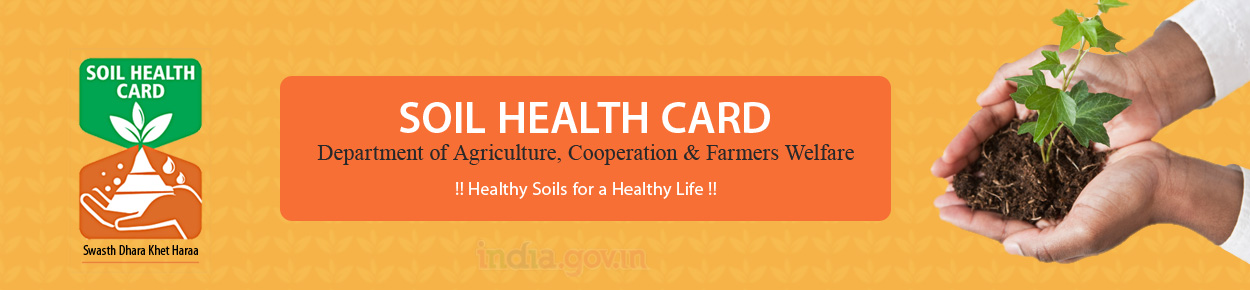
For generations, Indian farmers have relied on traditional wisdom and experience to cultivate their lands. While invaluable, this approach often overlooks a crucial element for optimal yield: the precise health of the soil itself. Recognizing this, the Government of India launched the Soil Health Card (SHC) Yojana on February 19, 2015, from Suratgarh, Rajasthan. This visionary scheme aims to empower farmers with scientific insights into their soil, fostering sustainable agriculture and boosting productivity.
What is the Soil Health Card Yojana?
The Soil Health Card Yojana is a program that provides farmers with a detailed report, or “card,” on the nutrient status of their farm’s soil. This card is issued every three years, allowing farmers to monitor changes in their soil’s health over time. It’s designed to give farmers actionable recommendations on the appropriate dosage of fertilizers and soil amendments needed to improve soil fertility and maximize crop yields.
The Science Behind the Card:
Each Soil Health Card contains information on 12 crucial parameters that determine soil health:
Macronutrients: Nitrogen (N), Phosphorus (P), Potassium (K)
Secondary Nutrient: Sulphur (S)
Micronutrients: Zinc (Zn), Iron (Fe), Copper (Cu), Manganese (Mn), Boron (Bo)
Physical Parameters: pH (acidity or basicity), Electrical Conductivity (EC – salt content), Organic Carbon (OC – indicates soil fertility)
Soil samples are collected by trained personnel from a grid of 2.5 hectares in irrigated areas and 10 hectares in rain-fed areas. These samples are then rigorously tested in various soil testing laboratories across the country. Based on these analyses, experts identify nutrient deficiencies and imbalances and provide customized recommendations for fertilizer application and soil amendments for different crops.
Why is Soil Health So Important?
Healthy soil is the foundation of productive agriculture. Over time, without proper nutrient management, soils can become depleted, leading to:
Reduced Crop Yields: Nutrient deficiencies directly impact crop growth and development, leading to lower harvests.
Increased Input Costs: Farmers might over-apply fertilizers in an attempt to compensate for perceived deficiencies, leading to wasted resources and increased expenses.
Environmental Degradation: Imbalanced fertilizer use can contribute to nutrient runoff, water pollution, and soil degradation.
Unsustainable Practices: Continuously extracting nutrients without replenishment can severely harm the long-term viability of agricultural land.
The Soil Health Card addresses these issues by promoting judicious and balanced use of fertilizers, leading to:
Improved Soil Fertility: By identifying precise nutrient needs, farmers can apply the right amount of fertilizers, enhancing soil health and nutrient availability.
Optimized Input Costs: Farmers can save money by avoiding unnecessary application of fertilizers, as demonstrated by studies showing 8-10% savings in chemical fertilizer use and a reduction in cultivation costs.
Increased Crop Productivity: Research has shown significant increases in crop yields (e.g., 30.8% in wheat, 29.8% in paddy) with the adoption of SHC-based recommendations. This translates directly to higher income for farmers.
Sustainable Agriculture: By promoting nutrient management and reducing chemical overuse, the scheme contributes to environmentally friendly farming practices and preserves soil health for future generations.
Empowerment of Farmers: The SHC empowers farmers with scientific knowledge, enabling them to make informed decisions about their cropping patterns and nutrient management.
Technological Advancements and Accessibility:
To ensure wider reach and easier access, the scheme has embraced technology:
The Soil Health Card Portal (
https://soilhealth.dac.gov.in/) allows farmers to view, download, and print their cards. It’s available in multiple languages and dialects.The portal is integrated with a Geographic Information System (GIS), mapping all test results for better visualization and analysis.
A robust mobile application further enhances accessibility, allowing for smoother sample collection, tracking, and access to reports, with features like geo-mapping of sample locations and QR code integration.
How to Get Your Soil Health Card:
The process for obtaining a Soil Health Card is systematic:
Soil Sample Collection: State agriculture department staff or outsourced agencies collect soil samples from individual farm holdings. Farmers can also get their samples tested through Village-level Soil Testing Labs.
Sample Testing: Samples are coded and sent to soil testing laboratories for analysis of the 12 parameters.
Report Generation: Based on the test results, a comprehensive Soil Health Card is generated with crop-wise fertilizer recommendations.
Distribution: The cards are distributed to farmers. They can also access and download their cards from the official Soil Health Card portal using their mobile number or registration ID.
A Look at Rajasthan’s Role:
It’s noteworthy that the Soil Health Card Yojana was launched right here in Suratgarh, Rajasthan, highlighting the state’s pioneering role in this crucial initiative. Rajasthan has been actively involved in strengthening soil testing infrastructure, with initiatives to establish new soil testing laboratories and enhance testing capacity. Awareness campaigns and farmer training programs are also regularly conducted to popularize the scheme and encourage adoption of its recommendations.
The Road Ahead:
While the Soil Health Card Yojana has made significant strides, continuous efforts are needed to address challenges like timely distribution of cards, further strengthening of soil testing infrastructure, and enhancing awareness among all farmers, especially in remote areas. The integration of the scheme with other agricultural programs like PM-Rashtriya Krishi Vikas Yojana (RKVY) further underscores its importance in the broader agricultural development landscape.
The Soil Health Card Yojana is more than just a piece of paper; it’s a tool for transformation. By enabling farmers to truly “know their soil,” it empowers them to cultivate healthier crops, achieve better yields, and build a more prosperous and sustainable future for themselves and for the nation.